
Floor Densification Process: From Grinding to Polished Concrete Finish
Learn Floor Densification Process for industrial and commercial concrete floors, including specification, process, benefits, maintenance and when to choose d.
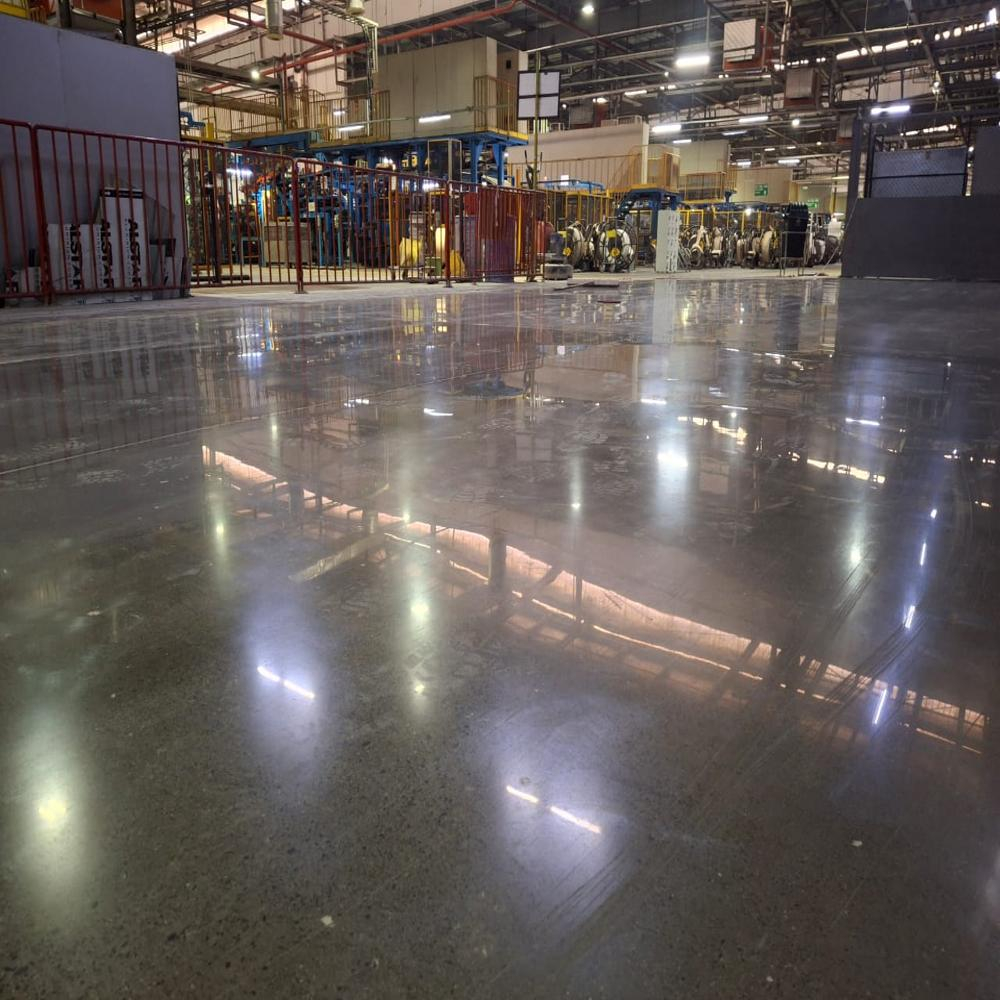
Table of Contents
Site Inspection
The floor densification process starts with site inspection. The concrete is checked for cracks, weak areas, laitance, contamination, moisture, flatness and the finish level expected by the client.
Grinding and Surface Opening
Grinding opens the concrete surface, removes weak surface material and prepares the slab for densifier penetration. The grinding level depends on whether the floor needs a matte industrial finish or a more polished look.
Densifier Application
The densifier is applied to the prepared concrete so it can penetrate and react inside the surface. Correct dwell time, coverage and cleanup are important for consistent results.
Polishing Sequence
After densification, polishing is done using progressive diamond tooling. The number of polishing steps decides the final finish, from low-sheen industrial polish to a brighter reflective surface.
Final Protection and Handover
A final stain guard or protective treatment may be recommended for warehouses, showrooms and factories. Resin Kraft also provides maintenance guidance so the polished concrete floor performs well after handover.
Common Questions
What is Floor Densification Process?
Floor Densification Process refers to a concrete floor treatment approach that hardens, refines or maintains the concrete surface so industrial floors become cleaner, stronger and easier to manage.
Is floor densification suitable for industrial floors?
Yes. Floor densification is suitable for many warehouses, factories, logistics floors, showrooms and commercial facilities where the existing concrete is structurally sound.
How does concrete densification reduce dust?
A densifier penetrates the concrete and reacts with free lime to create a denser surface, which reduces loose concrete dusting and improves daily housekeeping.
Is polished concrete better than epoxy flooring?
Neither is always better. Polished densified concrete is useful for dust control and low maintenance, while epoxy is better where chemical resistance, color systems, line marking or seamless coating protection are required.
Can old concrete floors be densified and polished?
Many old concrete floors can be densified and polished after grinding, cleaning and repairs. Oil contamination, weak concrete, cracks and moisture should be checked first.
How long does floor densification and polishing take?
Time depends on area, floor condition, grinding level, polishing finish and site access. Large industrial floors are often planned in phases to reduce downtime.
Does densified concrete need regular maintenance?
Yes. Dust mopping, neutral cleaner scrubbing, prompt spill removal and periodic inspection help maintain the finish and surface performance.
Where should floor densification not be used?
It may not be ideal for areas with heavy chemical exposure, hygiene coving needs, frequent wet processing or strong color/line marking requirements. A resin coating or PU system may be better there.
What finish can be achieved with polished concrete?
The finish can be planned from matte to satin or higher gloss depending on concrete quality, grinding steps, polishing pads and protection system.
Does Resin Kraft provide floor densification service?
Yes. Resin Kraft can inspect your concrete floor and recommend floor densification, polishing, epoxy coating, PU flooring or repair based on actual site use.